Research highlights

This section showcases recent research findings enabled by FinnGen data and the Finnish biobank participants. Below you can find several examples of how FinnGen is helping to increase our understanding of the genetic drivers of human diseases, pinpointing possible therapeutic targets.
A map of Finland with chromosomes surrounding it, and human figures representing all stages of human lifespan.
New results from the FinnGen research consortium demonstrate the undeniable benefits of Finnish health research environment for genomic research. Among the wealth of novel genetic discoveries are…
A drawing of a family with two children, showing the classical inheritance model, with question marks on top.
A large-scale biobank-based study performed in Finland has discovered several new disease genes as well as new insights on how known genetic factors affect disease. The study highlights an…
Abstract digital illustration of DNA-like sequences represented by rows of coloured rectangular blocks and fine lines, with glowing purple, blue, turquoise and yellow elements against a dark blue background.
Using data from more than 1,100 Finnish blood donors participating in FinnGen, researchers have created an atlas of over 10 million immune cells that links disease-associated genetic variants to the…
A digital blood pressure monitor and different medical pills on a white table.
A variant found in 1 in 30 Finns may protect against the dry cough that often leads patients to stop taking ACE inhibitors, a common blood pressure medication. The study also identified a genetic…
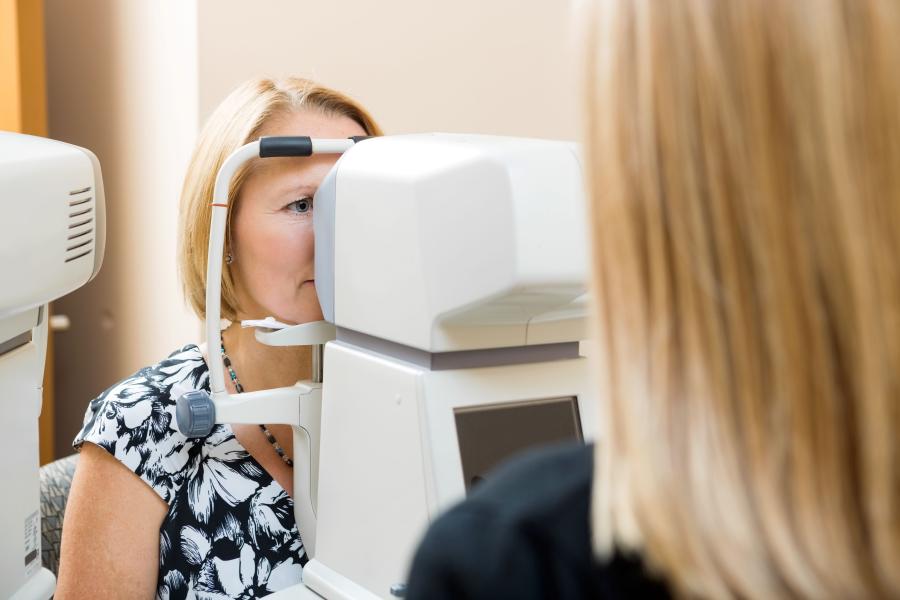
A woman with light hair looks into an eye examination device while a healthcare professional performs an eye test in a clinical setting.
Polygenic risk scores can identify individuals at substantially increased risk of developing glaucoma and those whose disease is likely to progress more rapidly. A new screening model based on these…
A woman is seated on a sofa wearing a light-colored knitted sweater and dark jeans, with both hands gently resting on a prominently rounded pregnant belly.
Intrahepatic cholestasis of pregnancy (ICP) is the most common liver condition that occurs during pregnancy and is characterised by a disruption in the normal flow of bile from the liver. A new…
A person is shown from behind, with the vertebrae of the spine and a red glow indicating pain superimposed on their clothing using AI.
An international research team has identified dozens of new genetic risk factors linked to lumbar spinal stenosis, a common degenerative condition of the lower spine. The study, led by researchers at…
Think-sanasta tulevien kirjaimien muodostamat aivot violetilla pohjalla.
An international collaboration of genetic researchers has identified more than 90 genetic regions associated with the risk of Alzheimer’s disease and related dementias. The large-scale meta-analysis…
Human brain with abstract neural network lines on a blue background.
A major genetic risk factor for delirium has been identified in a landmark study that analysed the DNA of more than one million people worldwide.
Hand holding a heart-shaped graphic with an ECG line.
Cardiac arrhythmias such as atrial fibrillation can pose a significant health risk or even lead to sudden death. At the same time, the prevention and treatment of these conditions is very difficult.…