Doctoral thesis unravels the genetic characteristics of blood donors
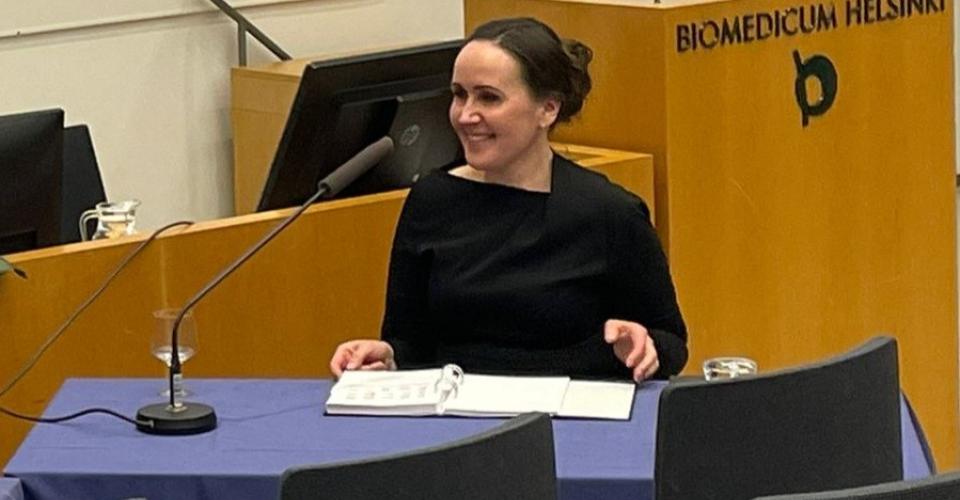
M.Sc. Jonna Clancy defended her thesis "Genetic structure of the Blood Donor Biobank and its Applications in Personalized Blood Donation and Transfusion" on January 31, 2025. The study was conducted in the Finnish Red Cross Blood Service in collaboration with the University of Helsinki.
In her PhD thesis, Clancy focused on the genetic structure of a blood donor-based biobank in Finland, utilizing genome and proteomics data produced as part of FinnGen. Almost 54,000 active blood donors with extensive donation histories and 228,000 controls from other biobank cohorts within the FinnGen project served as an excellent material to study the genetics of an active blood donor population, particularly focusing on the genetics underlying the Healthy Donor Effect (HDE).
The results revealed the genetic structure underlying the HDE and highlight the enrichment of protective genetic factors against multiple diseases in active blood donors. Moreover, HDE was shown to extend beyond blood donation criteria to multiple disease classes, including infectious diseases and mental health. In addition to further research topics, these findings provide valuable insights into membership biases in genetic epidemiological studies using blood donors or other healthy populations as control or study groups.
Furthermore, the results have enabled piloting of personalized blood donation and transfusion applications in the Finnish Red Cross Blood Service as well as returning genetic risk information to donors. Donors with genetic predisposition to hemochromatosis were referred to health care providers for further consultation. Iron supplementation for these donors will be avoided in future blood donations. To reduce the risk of alloimmunization, HLA compatible platelet donors for highly immunized patients or patients with a rare HLA type were identified.
The thesis is available online here: Genetic structure of the Blood Donor Biobank and its Applications in Personalized Blood Donation and Transfusion
Read more from the University of Helsinki's press release (in Finnish)