Doctoral thesis highlights how biobank samples from blood donors can unlock functional insights into disease genetics
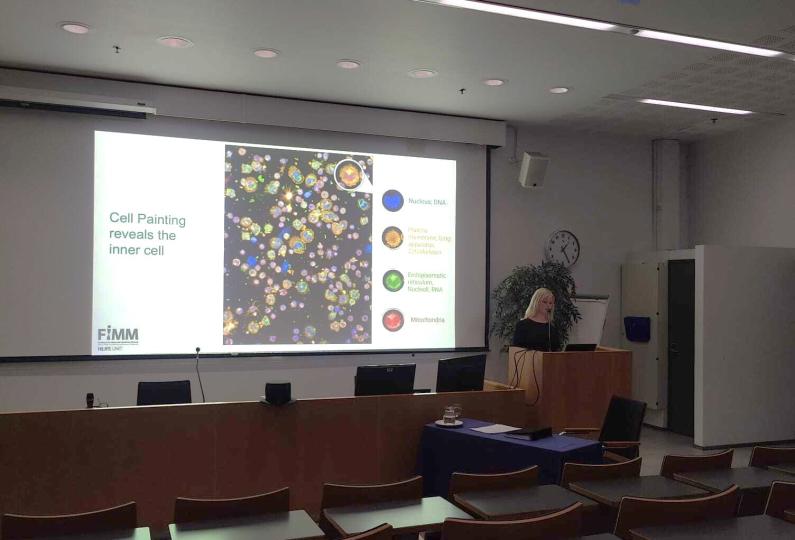
M.Sc. Veera Timonen defended her doctoral dissertation "Multimodal investigation of hematological features in healthy blood donors" in the Faculty of Medicine, University of Helsinki, on 27 March 2026.
In her thesis, Timonen applied advanced computational methods to analyze blood cell morphology at scale. The work provides an important reference for understanding normal variation in blood cells, supporting disease research in FinnGen and beyond.
A central part of the thesis builds on a recent study published in Scientific Reports, where Timonen and colleagues developed a pipeline to collect and analyze high-quality biological samples from blood donors. The work, led by researchers from the Finnish Red Cross Blood Service, shows that routine blood donation can serve as a powerful and scalable resource for research.
Importantly, the study demonstrates that most genetic variants of interest to FinnGen can be captured without targeted recruitment: they are already present in samples collected from biobank donors through standard blood donation. This finding highlights a major opportunity, as functional follow-up studies can be built on existing sample flows without the need to recall participants.
The samples collected through this approach were shown to be suitable for a wide range of analyses, including cell imaging, proteomics, and other multi-omics methods. Because blood donors are generally healthy, these data provide a clean baseline for studying biological variation and for interpreting disease-related changes.
One of the main aims of FinnGen’s current phase is to move beyond identifying genetic associations and toward understanding their biological consequences. While genome-wide studies have already identified numerous variants linked to disease, uncovering how these variants function at the molecular and cellular level remains a key challenge.
Timonen’s work directly supports this goal. By linking genetic variation with detailed cellular phenotypes derived from imaging and multi-omics data, her research helps bridge the gap between statistical associations and biological mechanisms.
Together, the findings of the thesis show how combining large-scale genomic data with rich functional measurements can accelerate the translation of genetic discoveries into biological insight—an essential step toward improved diagnostics and therapies.
Following her successful defense, Timonen has joined the FinnGen core team, where she will continue working at the interface of data science and genomics.